ABA Therapy Goals: What Real Progress Looks Like

In short: ABA therapy goals focus on building communication, social, and daily living skills in a way that respects the child's individuality. Progress is measured through data collection and observable behaviors, but real progress also includes increased confidence, independence, and quality of life. A free matching service can help families find a BCBA-led provider who designs these goals collaboratively.
Key takeaways
- Goals are individualized and family-centered, not one-size-fits-all.
- Progress is data-driven but also measured by real-world improvements in confidence and independence.
- Target areas include communication, social skills, self-help, and behavior reduction.
- ABA therapy is commonly covered by private insurance and Medicaid.
Find your child's ABA provider
About 60 seconds · free & confidential
- ✓ Vetted, BCBA-led providers
- ✓ In-home, center & telehealth
- ✓ No obligation, ever
Understanding ABA Therapy Goals
Applied Behavior Analysis (ABA) therapy is a widely recognized, evidence-based approach for supporting autistic children. At the heart of any effective ABA program are the goals. These are not arbitrary targets; they are carefully crafted, individualized objectives that guide the therapy and measure progress. But what do these goals actually look like? And more importantly, what does real progress mean beyond a graph or a checklist?
Real progress in ABA therapy means the child is developing skills that improve their quality of life, increase their independence, and allow them to engage more meaningfully with the world around them. It is not about forcing a child to act "neurotypical" or eliminating harmless behaviors like stimming. Instead, it is about empowering the child with functional tools while respecting their unique neurology.

🔗 Related reading: Why Does My Child Line Up Toys? Understanding Repetitive Play · Local ABA Therapy
The Foundation of Meaningful ABA Goals
Meaningful goals are built on a strong foundation of assessment, collaboration, and respect for the child and family. A Board Certified Behavior Analyst (BCBA) conducts a comprehensive assessment, often including interviews with parents, direct observation, and standardized tools. This assessment identifies the child's strengths, needs, and the environmental factors that influence their behavior.
Family-Centered Collaboration
Families are the experts on their child. Effective ABA goals are developed in partnership with parents and caregivers. The BCBA listens to the family's priorities: what skills would make the biggest difference in daily life? For one family, it might be teaching the child to request a snack instead of grabbing. For another, it could be learning to use the toilet independently. Goals should reflect the family's values and cultural context.
Person-First and Strengths-Based
While ABA often focuses on skill deficits, the best goals also leverage the child's existing strengths and interests. For example, if a child loves trains, a goal for requesting can be practiced by asking for a train to be pushed back and forth. This approach makes learning motivating and respectful. Goals should never aim to suppress harmless autistic traits like hand-flapping or intense interests; instead, they teach alternative ways to communicate needs or regulate emotions.
Looking for ABA therapy for your child? We match families with vetted, BCBA-led providers near you.
Get matched freeCategories of ABA Goals
ABA goals typically fall into several broad domains. Each goal is written in observable, measurable terms so that progress can be tracked objectively. Here are common categories with examples.
Communication and Language Goals
These goals help the child express wants, needs, and thoughts. They range from simple requests to complex conversations. Examples include: "The child will independently request a preferred item using a vocal approximation or AAC device in 4 out of 5 opportunities across two weeks" or "The child will answer 'who,' 'what,' and 'where' questions about a familiar story with 80% accuracy." Progress here often leads to reduced frustration and fewer challenging behaviors.
Social Skills Goals
Social goals focus on meaningful interactions, not forced eye contact or masking. Examples: "The child will initiate a play interaction with a peer by offering a toy or saying 'let's play' during free time at least once per session" or "The child will take turns in a structured game with an adult for 3 consecutive minutes." Real progress looks like the child enjoying social time and feeling connected.
Daily Living and Self-Help Goals
These goals promote independence in everyday tasks. Examples: "The child will brush their teeth with verbal prompts only, completing all steps within 5 minutes" or "The child will put on their coat independently before going outside." Progress in this area directly improves the family's daily life and the child's self-esteem.
Behavior Reduction and Replacement Goals
When a behavior is harmful or interferes with learning, the goal is to teach a functionally equivalent replacement behavior. For example, instead of hitting when frustrated, the child learns to say "I need a break" or use a calm-down card. The goal is written as: "The child will use a communication card to request a break instead of engaging in aggression, with 90% reduction in aggression over one month." Real progress is not just the absence of the behavior but the presence of a new skill.
Pre-Academic and School Readiness Goals
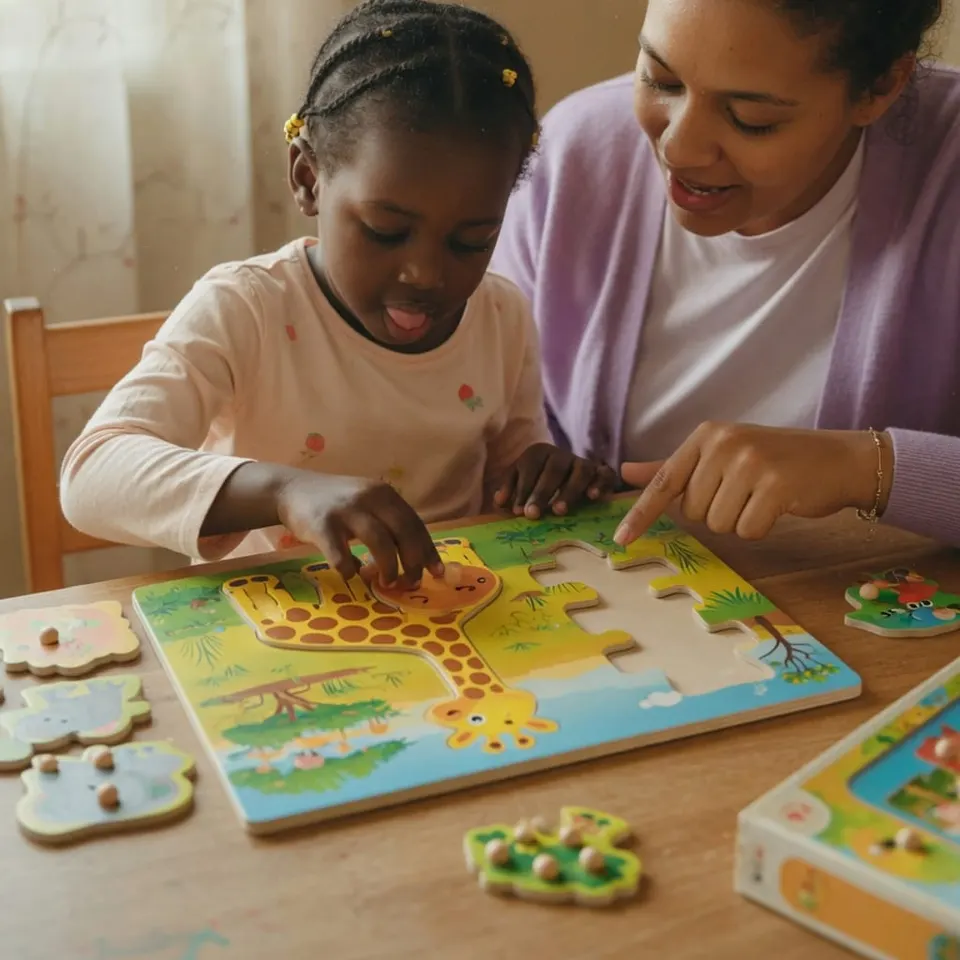
For younger children, goals may involve sitting at a table for a short time, following simple instructions, or attending to a task. For older children, goals might include completing homework with fewer prompts. These goals are designed to help the child succeed in inclusive educational settings.
🔗 Related reading: Toe Walking and Autism: Should I Get ABA? · Nearby ABA Therapy
How Progress Is Measured
ABA is a data-driven science. BCBAs and registered behavior technicians (RBTs) collect data on each goal during therapy sessions. This data is graphed and analyzed regularly to determine if the child is making progress toward mastery. Mastery criteria are set in advance, such as "80% correct across three consecutive sessions." However, data is only one part of the picture.
Beyond the Data: Real-World Application
Real progress is when the child uses a skill spontaneously in a natural setting. For example, a goal for requesting a snack might be mastered in the clinic, but true progress happens when the child asks for a snack at home without any prompt. Parents often report these moments as the most meaningful. A good BCBA will also measure generalization (using the skill in different places with different people) and maintenance (keeping the skill over time).
Qualitative Indicators of Progress
Look for these signs of real progress: the child seems happier and less anxious, they initiate interactions more often, they tolerate transitions better, they engage in play with more flexibility, and they show pride in their accomplishments. These qualitative changes are just as important as the numbers on a graph.
What Real Progress Looks Like
Real progress is deeply personal. It might look like a non-speaking child using an AAC device to say "I love you" for the first time. It might look like a child who used to have daily meltdowns now taking a deep breath and asking for a break. It might look like a child learning to tie their shoes, which gives them a sense of independence at school.
Celebrating Small Wins
Progress in ABA is often incremental. Celebrating small wins keeps the family and child motivated. A small win could be the child tolerating a new food for one bite, or sitting through a 5-minute story without eloping. These small steps build toward larger goals. It is important to recognize that every child progresses at their own pace, and that is okay.

Insurance Coverage and Costs
ABA therapy is widely recognized as medically necessary for autistic children, and most private insurance plans cover it under the mental health or autism benefit. Medicaid also covers ABA in many states. However, navigating insurance can be complex. That is where a free matching service like Trusted ABA Therapy can help. The service works with families to find providers who accept their insurance, including Medicaid, and can assist with verifying benefits. There is no cost to families for using the matching service.
Costs for ABA therapy vary depending on hours, location, and provider. With insurance, copays and deductibles apply. Many providers offer a free initial consultation to discuss goals and coverage. The key is to find a BCBA-led provider who designs goals that are meaningful to your family.
Common Mistakes to Avoid
Families and providers can sometimes fall into traps that undermine progress. Being aware of these can help you advocate for better goals.
Setting Unrealistic or Too Many Goals
One common mistake is trying to target too many skills at once. This can overwhelm the child and lead to slow progress. A good ABA program focuses on a handful of high-priority goals at a time. The BCBA should explain why each goal was chosen and how it fits into the bigger picture.
Focusing Only on Compliance
Goals that only demand compliance (e.g., "The child will follow all instructions within 5 seconds") without teaching functional skills can be harmful. Real progress is about building skills, not obedience. Ensure goals are functional and meaningful to the child's life.
Ignoring the Child's Voice
Even non-speaking children have preferences. Goals should respect the child's autonomy. For example, if a child strongly dislikes a certain activity, a goal should not force them to do it. Instead, teach them to communicate refusal appropriately. The child's assent should be considered during therapy.
Neglecting Generalization
If skills are only practiced in a clinic, they may not transfer to home or school. Ask the provider how they plan to generalize goals across settings. Real progress means the child can use the skill in the real world.
How to Get Started with a BCBA-Led Provider
If you are considering ABA therapy for your child, the first step is to find a qualified, BCBA-led provider who aligns with your values. Trusted ABA Therapy offers a free matching service that connects families with vetted providers in their area. The process is simple: you provide information about your child and your insurance, and the service matches you with providers who have availability and expertise. You can then interview them, discuss their approach to goal setting, and choose the best fit.
Remember, ABA therapy goals should be a living document, reviewed and updated regularly as the child grows. Real progress is a journey, not a destination. With the right provider and a collaborative approach, your child can develop skills that open doors to a fuller, more independent life.